

Potty training
Reward Chart
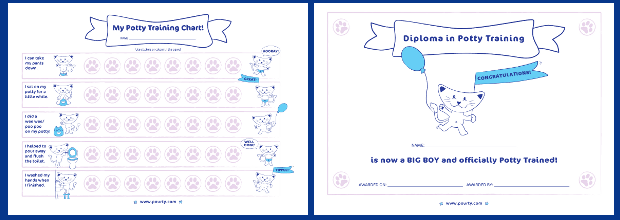
We have created our very own Reward Chart and Diploma to help you along the way. Please downlaod your copy for free by clicking on the following links: Boys’ Potty Training Reward Chart, Boy’s Diploma, Girls’ Potty Training Reward Chart and Girl’s Diploma.
Potty Training Tip of the Week
Sara Wainwright on facebook had a good tip if your child is scared of their potty. Try pretending that their doll or soft toy has used it first. This might take away the fear factor.
When to start potty training
Potty training is an important milestone for your child. Over the years, parents have tried many different techniques including holding their babies over the toilet from an early age after meals and encouraging them to do a pee, using a regimented schedule of fluid intake and toilet visits or trying systems of punishments and rewards. Now the most commonly used method is to wait until the child starts to show an interest and the parent feels up to the task.
There is no “right” time to potty train. We suggest that sensible starting ages for potty training range from 18 months to 3 years (28 months is the average age). The younger the child, the longer potty training is likely to take.

Some signs that your child might be ready for potty training are:-
- can stay dry for at least two hours between wet nappies;
- regular or predictable bowel movements;
- being interested in others going to the toilet and asking questions about it;
- telling you when they have done or are in the process of doing a poo or a pee in their nappy; telling you that they are wet or showing discomfort when their nappy is soiled
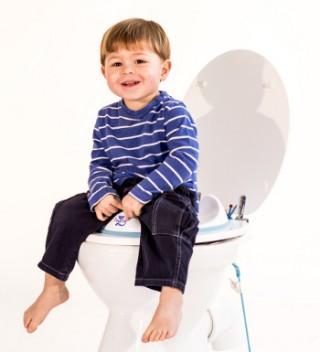
- sitting on the potty (which means it can be a good idea to have one around before your child is ready) and able to get on and off the potty;
- being able to pull down their own trousers and pants (and pull them back up again would be a bonus);
- enjoying praise and showing a desire to please and cooperate.
- able to understand simple instructions such as “find your potty” or “wash your hands”.
The most important thing is not to have a battle with your child. If they begin to associate the potty with feelings of negativity the process will take much longer than is necessary. If you start the process and feel you’re not getting anywhere or there has been no improvement after a couple of days we would suggest that you stop potty training and try again in a couple of months. Avoid potty training at the same time as any big changes in the family like a new baby or a house move. You need to be prepared and able to commit time. Have confidence in your own ability to judge the right time for your child and don’t feel pressurised by other people. Also, try and make sure that your child’s other carers are consistent with your approach.
Equipment
How to start
Prepare by deciding how you are going to describe the “wee and poo” and explain this to your child. Show your child how to do it by letting them see you on the toilet. It’s a nice idea to read stories about potty training and go on a shopping trip to choose new pants.
You could start putting them on the potty routinely at bath time or in the morning just to see what happens for a few weeks. Being happy to sit on the potty is a really good start. You could try letting your child run around with no underwear to help them understand that the nappies are going. When your child is ready be brave and put him/her in “big boy / girl” pants.
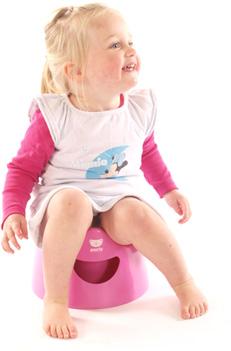
Encourage your child to sit on the potty every couple of hours – not too often or they may become bored and never force your child to sit if they resist. Don’t keep them sitting on the potty for too long, perhaps no longer than two or three minutes and stay calm if they get up and run away.
It is very important to be patient and go at your child’s pace. It can take time to toilet train and there are bound to be some frustrations. Let your child know what you want but above all be consistent and positive. Provide lots of praise and make your child feel clever and special.
Your child is potty trained when they are able to use the potty or toilet fairly independently so they know when they want to go and are able to react by using the potty or toilet. Wiping can take a while to master and is quite tricky for young children. Introduce the idea and practice when your child is ready.